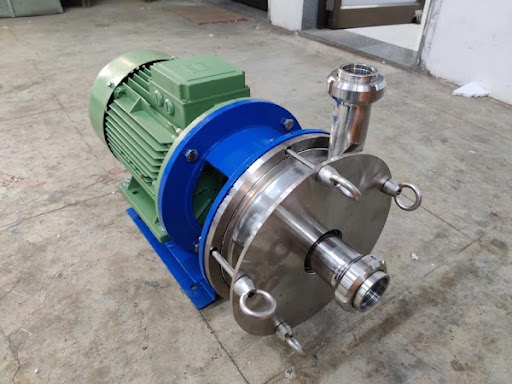
Working Principle
• Kinetic Transfer: An electric motor spins an internal impeller inside a smooth casing (volute). • Eye to Discharge: Liquid enters through the center (the "eye") of the impeller and is slung outward by centrifugal force. • Velocity to Pressure: As high-speed liquid exits the impeller vanes, the expanding shape of the volute converts kinetic velocity into discharge pressure. • Flow Profile: They deliver a smooth, pulse-free, continuous flow best suited for low-viscosity fluids (typically under 200 cP) rather than heavy pastes. Key Sanitary Design Features • Material Composition: Constructed with corrosion-resistant, high-grade stainless steel (such as AISI 316L or CF3M) for all product-wetted surfaces. • Surface Finish: Ultra-smooth internal finishes prevent bacterial adhesion, product buildup, and biofilm formation. • Open or Semi-Open Impellers: Designed with open or semi-open vanes to eliminate hidden crevices and allow thorough visual inspection and cleaning. • Hygienic Shaft Sealing: Utilizes specialized single or double mechanical shaft seals (frequently external or cleanable) designed to avoid dead zones. • CIP / SIP Compatibility: Built to endure regularly.